Showing posts with label Gregory Bellelo. Show all posts

Monday, April 11, 2011

Friedrick Nietzsche Three Types of History


In class this week we discussed Friedrick Nietzsche and his philosophy on history. Nietzsche believed there were three types of history which were monumental, antiquarian, and critical. The first type of history Friedrick discusses is monumental history. Monumental history essentially means writing history to make a great hero even greater. Friedrick explains: “That the great moments in the struggle of individuals form a chain, that in them the high points of humanity are linked throughout millennia, that what is highest in such a moment of the distant past be for me still alive, bright and great – this is the fundamental thought of the faith in humanity which is expressed in the demand for a monumental history.” The next topic of history he discussed was antiquarian history. Nietzsche's conception of antiquarian history revolves around the local history of specific social and civic communities. This means, a historian's musings about his or her city, or a recounting the history of his or her country. It is the sort of history that remembers socially, both productively and unproductively. Finally, the last type of history Friedrick discussed was critical history. Friedrick describes this type of history as the sort of history one utilizes when the monumental structures fail to inspire and learning becomes unproductive thoughts and a conservative motionlessness.

Nietzsche's Three Types of History


In class this week we discussed Friedrick Nietzsche and his philosophy on history. Nietzsche believed there were three types of history which were monumental, antiquarian, and critical. The first type of history Friedrick discusses is monumental history. Monumental history essentially means writing history to make a great hero even greater. Friedrick explains: “That the great moments in the struggle of individuals form a chain, that in them the high points of humanity are linked throughout millennia, that what is highest in such a moment of the distant past be for me still alive, bright and great – this is the fundamental thought of the faith in humanity which is expressed in the demand for a monumental history.” The next topic of history he discussed was antiquarian history. Nietzsche's conception of antiquarian history revolves around the local history of specific social and civic communities. This means, a historian's musings about his or her city, or a recounting the history of his or her country. It is the sort of history that remembers socially, both productively and unproductively. Finally, the last type of history Friedrick discussed was critical history. Friedrick describes this type of history as the sort of history one utilizes when the monumental structures fail to inspire and learning becomes unproductive thoughts and a conservative motionlessness.
Wednesday, March 30, 2011

Aesthetic, society vs. the absolute

In class on Wednesday we discussed about the Aesthetic which means there is no good or bad. These people flee judgment. Slimy people do not have identity, and usually are uncommitted. Some examples of aesthetics are Hedonist, and Intellectual. Hedonist means life is pleasure and Intellectual means life is thought. Some difficulties that aesthetics face are internal contradictions between immediacy and living for future possibilities, neurosis of who am I, and Boredom results. The main point about aesthetic difficulties is people have to be willing to change their identity and way of life if one desires change. Later on in class we discussed the ethical. Ethical is a leap of choosing to accept moral standards. An example gave in class of this was a homeless guy being spit on. One who sees this has a choice to either defend this homeless person or to just walk away. During this time one has the ought or duty to help the homeless and take that risk, and despair. When we discussed this it made me think about when I stand up for someone or do a favor for them. I asked myself whether I did this out of ought or duty, despair, or just self-choice because I know it’s the right thing to do. Ethical people usually end up being the Knight of Resignation which means people are always going to be in despair for doing a just thing. People know what is expected of them in society, and most of the time we do not live up to those standards and think we have failed. Mill says “Customs where made from Customary” which mean some actions may seem unethical but one knows deep down that it truly is ethical. At the end of class we started to talk about society vs. the absolute and how there is not a commitment to the ethical to law but a purity of heart to will one thing vs. a universal.

Tuesday, March 15, 2011

Class synopsis 3/14/2011

In class on Monday, we began by discussing Kant and the two main questions he proposed. The two questions were: “Is it possible to know what is ultimately real” and “Is metaphysics even possible.” We were talking about noumena vs. phenomena, which is the things we see vs. how it appears.
As class continued, we began discussing Kant’s analytic and synthetic theory of perception. Kant states that humans only experience the world through a particular group of categories. The categories consisted of time and space. The class was deliberating how time shapes all of our perceptions and none of us have ever had an experience that was not conditioned by time. For example, anything a person does in life is experienced through time and space. What Kant is trying to convey is our understanding of the external world and its foundations not merely in experience, but in both experience and a priori concept.
The last thing we were discussing in class was Kant’s Deontological Ethics. The first duty states that actions must be good in itself and good with qualification. The next duty states that the only thing that is good is a good will (regardless of consequences) as pleasure, intelligence, and various other goods are not always good. The third duty states that consequences do not matter for morally good behavior simply because a bad person can perform actions that seem good and a good person can perform actions that seem bad.

Monday, February 28, 2011

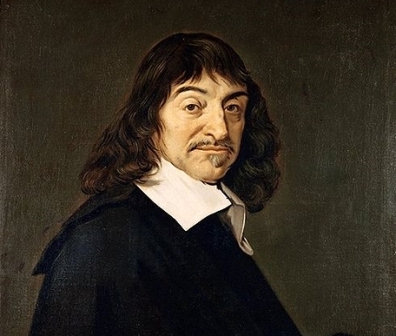
Descartes Meditations


In class this week we discussed Descartes’ meditations. First we talked about how Descartes describes the matter and mind He states that matter can be thought of as an extension in space while the mind is thought. Then we discussed Descartes’ use of methodological doubt. He uses this method to doubt the testimony of senses. Descartes has six meditations but in Fridays class we only focuses on the first two. Descartes first meditation calls the senses into doubt. He states the senses deceive humans through perspective, madness and dreams. For example, perspective deceives humans by making things look different from far away and up close. Descartes states that we could all be living a dream and just not be aware of it. He also says that the idea that God is being brings back the idea of existence. Descartes’ Second meditation is the idea that the only “I” that exists is the human soul, and not the body. He says that the soul is the only thing that is doubted. After analyzing Descartes thoughts I came to the conclusion that our ability to doubt is the only true proof that we legitimately exist.

Monday, February 21, 2011

Existence of God


Since I was born I have been a catholic. I was taught at a very young age about God and his existence. I believe in God, but have always questioned who God truly is. In class this week we discussed why God has to exist. We discussed in class several reasons why God truly exist. One argument is that understanding God fully is a very complex question that is hard to wrap your mind around and understand fully. Readers must be able to digest what the philosophers and bible offer and come to a conclusion about their perspective of whole God truly is. In my senior year of high school I learned about all the world religions of the world. Every religion had their own beliefs and stated why their beliefs of their god. At the end of this course I learned that the debate on whether God exist or not is all up to that person’s beliefs and perspective of God.

Monday, February 14, 2011

soul immortal or not?


In class on Monday, we talked about how “All men's souls are immortal, but the souls of the righteous are immortal and divine.” In Plato’s Phaedo, Socrates states that all souls are immortal, and we should welcome death. Plato provided four arguments to support his idea on the immortality of the soul. As I read them I started questioning the validity of his arguments. Socrates states that a human’s soul carries priori knowledge, which is given to us when it enters our bodies at birth. I believe this is a false statement. People do not have this unknown knowledge when they are born. Socrates also talks about the nature of opposites. Socrates is trying to convince his readers that “living” and “dying” have the same relationship as “larger” and “smaller.” This is a dilemma because one cannot compare reversible things like “larger” and “smaller” with irreversible things such as “living” and “dying.”

Monday, February 7, 2011

Happiness


In class this week we talked about virtues, happiness, and the good life. Socrates stated, “Happiness flows not from physical or external conditions, such as bodily pleasures or wealth and power, but from living a life that’s right for your soul, your deepest good.” After learning about Socrates beliefs on happiness, virtues, and the good life I can say I have found that. After hurricane Katrina hit New Orleans, I left Baton Rouge to go help people in New Orleans recover from the devastation. I was in the New Orleans area for two weeks helping pick up trash and repairing houses. When I looked at these people I felt so helpless because they had lost everything, but they were so strong and so thankful for my help. Giving my time and resources I had to help these people was one of the best choices I have made in my life. Helping these people in need was wonderful for them and helped me find my deepest good.

Monday, January 31, 2011

Immortality of the soul


In class this week we discussed common fallacies, Thales, Anaximander, Anaximenes, Xenophanes, Pythagoreans, and the immortality of the soul. We read about Socrates belief on the human soul when someone dies. He stated about four main reasons why souls are immortal, and proof to back his argument up. The first reason was souls are eternal and unchanging, the soul bring life and is “imperishable.” The next reason is the Theory of Recollection that states that souls existed before birth to be able to retain that knowledge. The third reason is our souls live on when our bodies die and decay. The last reason was the argument from form of life which states of our soul can never die. Socrates stated, “If the doctrine which you are fond of stating, that our learning is only a process of recollection, be true, then I suppose we must have learned at some former time what we recollect now.” I found this very interesting because I have never really thought of it that way. If all souls were immortal would all people start to act in an immortal way and be sad or not? I believe Socrates was a great philosopher. His arguments gave many people hope in the world of an afterlife and a reason to not be sad.

Sunday, January 23, 2011

Ethics and Fallacies


In class this week, we discussed ethics and common fallacies. In high school I learned about ethics and common fallacies in my world religions class, but never went into detail about them. In class we talked about asking the right questions. For a fallacy to be true the premises should make the conclusion true. One cannot just state facts. We must be able to back those facts up. For Example: All streets in New Orleans are paved with gold. Wall Street is a street in New Orleans. Wall Street is paved with gold. This is a false analogy. Always question the validity of the premises. Philosophy is a way of life; it’s not just stating your beliefs or preferences. At the end of class we discussed common fallacies people make. Some of these fallacies include false dilemma, argumentum ad ignorantiam, slippery slope, complex question, argumentum ad baculum, argumentum ad misercordian, prejudicial language, appeal to popularity, attacking the person, appeal to authority, hasty generalization, false analogy, irrelevant conclusion, and straw man. We went over these different fallacies in high school, but I hope this class will help me better identify the errors in reasoning.